
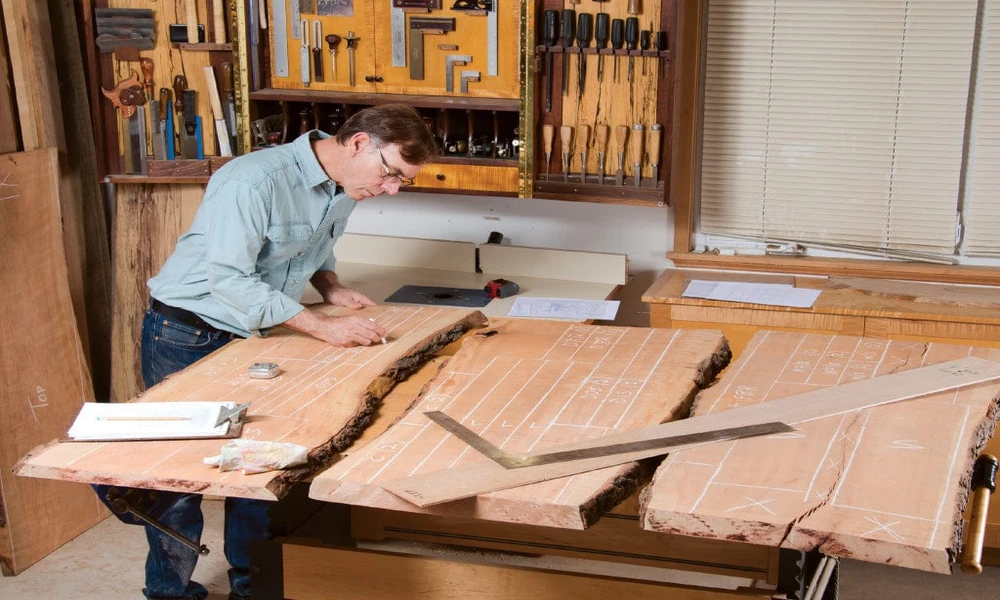
Custom furniture production requires careful coordination between design, material purchasing, cutting, and assembly. A cutting list optimizer can help turn a collection of furniture dimensions into a more organized cutting plan, making it easier to understand how individual components can be arranged on available boards and sheets before production begins.
Why Cutting Lists Are Important
A cutting list provides a practical connection between a furniture design and the manufacturing process. Instead of working from a drawing alone, the workshop has a detailed list of the components that need to be produced.
A typical cabinet may require side panels, shelves, doors, drawer fronts, drawer sides, partitions, backs, and other components. Each part has its own dimensions and quantity.
When a project contains only a few components, these calculations can be handled manually. However, larger furniture projects can quickly produce a list containing dozens or even hundreds of individual pieces.
Organizing Components
The first step is to organize all components clearly. Each part should have a recognizable name, accurate dimensions, quantity, and material specification.
Grouping components by material can make the production process easier. For example, all MDF components can be considered separately from plywood or decorative panels.
This also helps prevent a common problem in furniture manufacturing: producing a correctly sized component from the wrong material.
Clear labels are particularly useful when several pieces have similar dimensions. A shelf and a cabinet divider might look almost identical after cutting, but they may have completely different positions in the final furniture unit.
Making Efficient Use of Sheets
After the components have been listed, they need to be arranged on the available material.
The objective is not simply to fit everything onto a sheet. The arrangement also needs to consider practical cutting requirements and the shape of the remaining material.
Large components generally take priority because they have fewer possible positions. Smaller components can then be positioned in the remaining areas.
This can significantly reduce the amount of material that becomes unusable scrap. It can also help determine the number of sheets that need to be purchased before production starts.
Saw Kerf
One technical detail that needs to be considered during cutting is saw kerf, the width of material removed by the saw blade during each cut.
Although the amount may appear small, it becomes important when many cuts are required across a single sheet. A theoretical layout that ignores the material removed by the blade may not work correctly when transferred to the workshop.
The cutting equipment therefore needs to be considered when preparing the plan. Different blades and machines can produce different cutting widths, and the planned layout should reflect the equipment that will actually be used.
Working With Decorative Materials
Modern furniture frequently uses decorative boards with woodgrain patterns, textures, or other visual characteristics.
In these cases, components cannot always be rotated freely simply to improve material utilization. Doors, drawer fronts, and visible panels may need to maintain a consistent visual direction.
The cutting plan therefore needs to balance efficient material usage with the appearance of the finished furniture.
This is particularly important for kitchens, wardrobes, reception furniture, and other projects where multiple visible panels need to look consistent.
Improving Production Efficiency
A well-organized cutting list can improve more than material usage. It can also help the workshop establish a consistent production process.
Once components have been cut, they can be labelled and grouped according to the furniture unit or assembly they belong to. This reduces confusion when the project contains many similar parts.
The same information can also be useful for edging, drilling, machining, and final assembly. Workers can refer back to the component identification rather than repeatedly measuring pieces.
Planning Before Purchasing
Another advantage of preparing a cutting plan early is that it can influence purchasing decisions.
Instead of estimating material requirements based only on the total area of the furniture, the workshop can consider the actual dimensions and arrangement of the components.
This can provide a more realistic estimate of how many boards are required. It may also reveal that a different sheet size would produce a more efficient result.
For professional workshops, this information can be valuable when preparing quotations because material requirements form an important part of the total project cost.
Conclusion
A detailed cutting list is an important part of efficient furniture manufacturing. It helps connect the original design with the practical requirements of the workshop.
By organizing components, considering available sheet sizes, accounting for the saw kerf, and preparing the cutting layout before production begins, furniture makers can reduce unnecessary waste and make the manufacturing process easier to manage.
Careful preparation ultimately saves more than material. It can also save workshop time, reduce mistakes, and create a more predictable path from the initial furniture design to the completed product.

Comments are closed.